Reviving Cultural Heritage: The Restoration of B.C. Binning's Iconic Murals

Updated: Jun 9
Article by Brent Richter in The North Shore News
The Binning House stands as a cornerstone of Canadian architectural history, embodying the spirit of West Coast Modernism in its purest form. Within its walls, the visionary work of B.C. Binning, architect, artist and educator, came alive not only through structure but through art. His murals, once vibrant and integral to his holistic vision of architecture and art as inseparable, had faded into near obscurity. The recent restoration of these murals marks more than a repair project; it is a revival of cultural memory and artistic integrity.
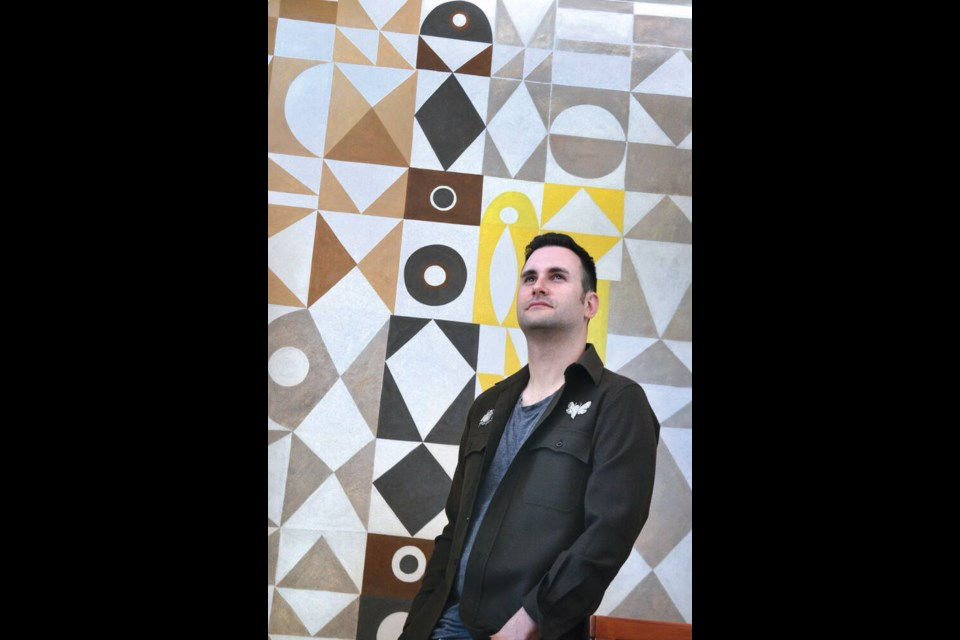
The Binning House and Its Place in Canadian Architecture
Constructed in the mid-20th century, the Binning House is recognized as one of the earliest and most influential examples of West Coast Modern architecture. This style, characterized by clean lines, integration with nature and a focus on craftsmanship, found a profound expression in Binning’s design. The house is not merely a residence but a manifesto of architectural ideals that shaped British Columbia’s cultural landscape.
B.C. Binning’s role extended beyond architecture. He was a cultural force, an artist whose work spanned painting, teaching and design. His belief that architecture and art should coexist seamlessly is embodied in the murals he created for his own home. These murals were not decorative afterthoughts but essential components of the living space, reflecting his vision of a unified artistic environment.
The Murals: Integral to Binning’s Vision
Binning’s murals were conceived as an extension of the house’s architecture. Their abstract forms and carefully chosen palettes echoed the natural surroundings and architectural elements. They invited viewers to experience the space as a total work of art, where walls spoke as much as windows or beams.
Over the decades, however, the murals suffered. Exposure to moisture led to mould damage, grime accumulated in the textured surfaces, and structural shifts caused cracking. Some sections were even covered over during renovations, erasing parts of Binning’s original narrative. The murals’ deterioration threatened to sever the connection between the house’s architecture and its artistic soul.
The Challenge of Restoration
Restoring the murals demanded more than routine conservation. It required museum-level expertise and a deep understanding of Binning’s artistic language. Conservator Cheryle Harrison undertook this delicate task with patience and precision. Her work involved:
Carefully removing layers of grime and mould without damaging the original paint
Stabilizing cracks and fragile areas to prevent further deterioration
Uncovering hidden sections that had been painted over, restoring the murals’ continuity
Matching original pigments and textures to maintain authenticity
This process was not simply about making the murals look new. It was about respecting the artist’s intent and preserving the emotional and historical resonance embedded in each brushstroke.
Jesse Saniuk’s Role in Preserving the Legacy
The restoration project also owes much to Jesse Saniuk, whose dedication to preserving the Binning House and its artistic heritage has been instrumental. His efforts ensured that the house remained a living monument to B.C. Binning’s vision, supporting the complex restoration work and advocating for the house’s cultural significance.
Together, Harrison and Saniuk’s collaboration represents a model of stewardship, careful guardianship of a fragile legacy that balances historical accuracy with contemporary preservation standards.
Recognition and Cultural Significance
Heritage BC’s recognition of the mural restoration underscores the project’s importance to British Columbia’s cultural heritage. This acknowledgment highlights how the Binning House and its murals are not just local treasures but vital pieces of Canada’s artistic and architectural history.
The restoration serves as a reminder that preserving cultural heritage requires ongoing commitment. It is about protecting stories, ideas, and creative expressions that define a community’s identity.
Stewardship for Future Generations
The revival of B.C. Binning’s murals within the Binning House is a powerful example of stewardship in action. It shows how restoration can breathe new life into fading histories, allowing future generations to experience and learn from them.
By preserving these murals, the project safeguards a unique dialogue between art and architecture, one that continues to inspire architects, artists, and cultural historians alike. The Binning House remains a beacon of West Coast Modernism, its walls now vibrant once more with the vision of a true Canadian master.

Comments